
Surface Grinding Services
Achieve exceptional flatness tolerances and superior surface finishes on components of all sizes.
Surface Grinding Overview
Surface grinding is one of the most fundamental precision machining processes, and at United Precision Grinding, it’s one of our core specialties. Our advanced surface grinding capabilities allow us to achieve exceptional flatness tolerances and superior surface finishes on components ranging from small precision parts to large industrial plates and blocks.
Surface grinding uses a horizontally-oriented grinding wheel to produce flat, parallel surfaces with tight tolerances and excellent surface finishes. This process is essential for valve flanges, gasket surfaces, machine bases, tooling plates, and any application requiring precise flatness specifications.
Surface Grinding Capabilities
Tolerance Capabilities
- Flatness: ±0.0002″ to ±0.0005″ (standard), ±0.0001″ (precision)
- Parallelism: ±0.0002″ to ±0.0005″ per inch of width
- Dimensional Tolerance: ±0.0005″ to ±0.001″
- Thickness Control: ±0.0005″ across component
Surface Finish Capabilities
- Standard Finish: 16 to 32 Ra
- Precision Finish: 8 to 16 Ra
- Super Finish: 4 Ra or better (when required)
Capacity Ranges
- Maximum Table Size: 24″ x 72″ and 30″ x 72″
- Maximum Part Weight: 10,000 lbs
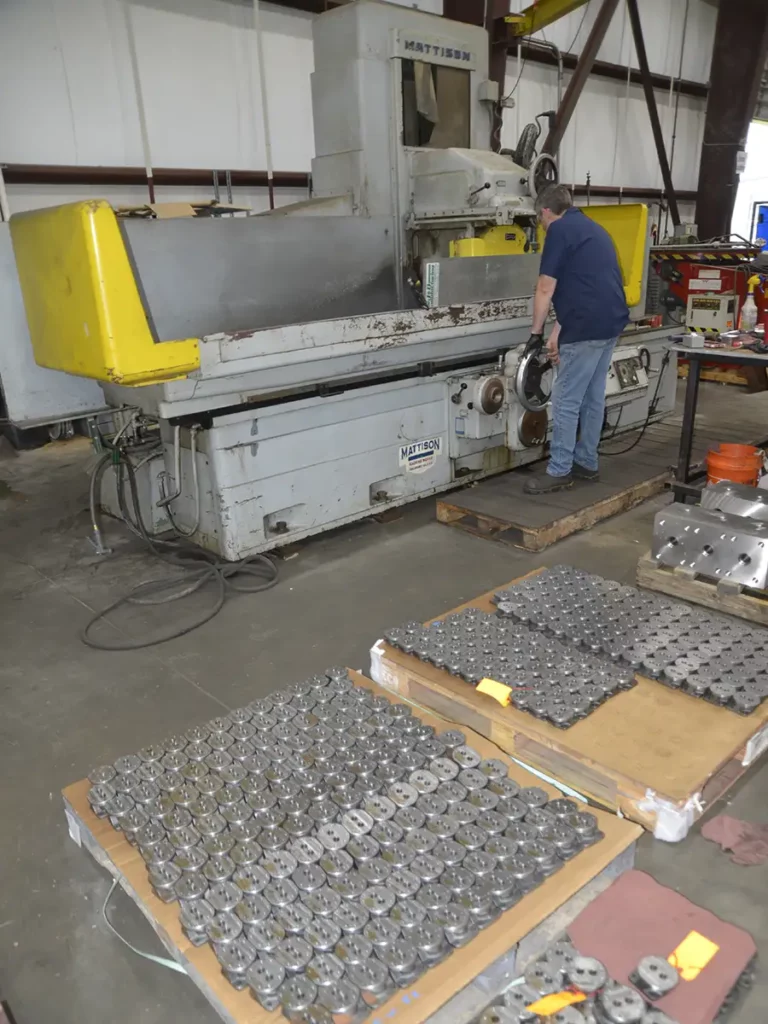
Surface Grinding Equipment
Large-Capacity Surface Grinder
Specifications:
- Table size: 24″ x 72″ and 30″ x 72″
- Maximum part weight: 10,000 lbs
- Grinding wheel: 20″ diameter x 6″ wide
- Control: Semi-automatic with CNC option
- Flatness: ±0.0002″ to ±0.0005″
- Surface finish: 16 to 32 Ra (standard), 8 Ra (precision)
Manual Precision Surface Grinders
Specifications:
- Table sizes: 24″ x 72″ and 30″ x 72″
- Workholding: Magnetic and vacuum chuck options
- Surface finish: 8 Ra or better
- Flatness: ±0.0002″ to ±0.0005″
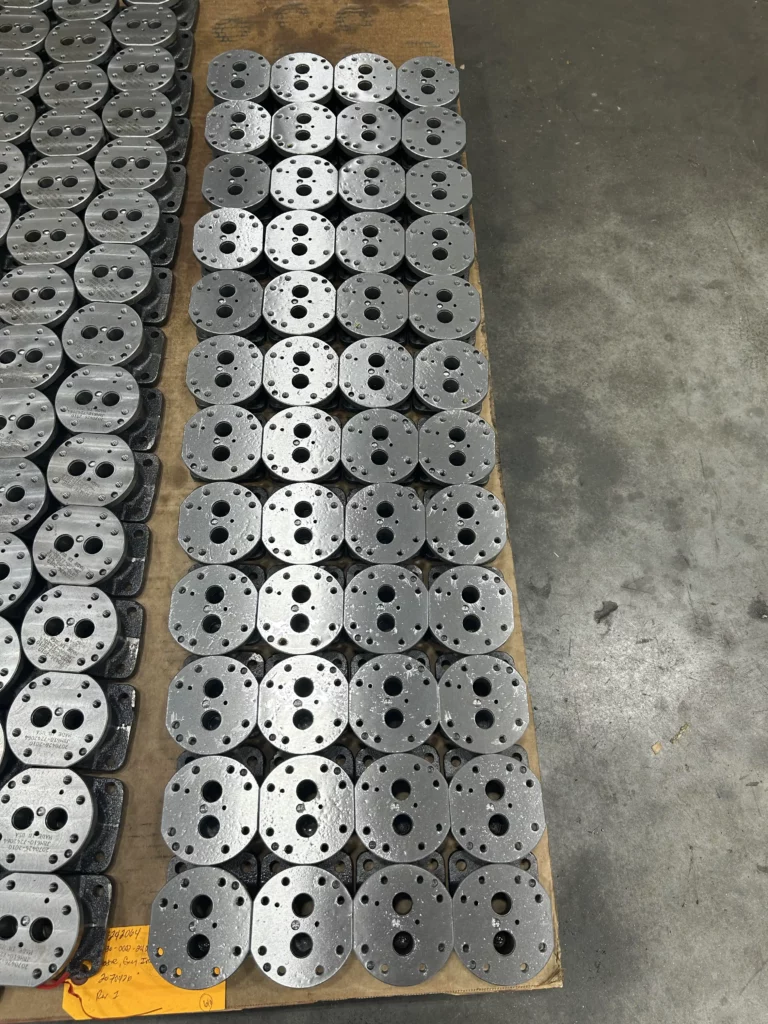
Common Surface Grinding Applications
Valve Components
- Valve Flanges: Achieving flatness for gasket sealing
- Valve Bonnets: Precision mating surfaces
- Valve Plates: Tight thickness tolerance and flatness
- Gate Surfaces: Sealing face preparation
- Seat Rings: Flat sealing surfaces
Industrial Components
- Machine Bases and Ways: Precision alignment surfaces
- Tooling Plates: Flat reference surfaces
- Fixture Plates: Precision work holding surfaces
- Structural Plates: Large flat components
- Wear Plates: High-hardness flat surfaces
Oil & Gas Components
- Flange Faces: Pressure vessel and piping flanges
- BOP Components: Critical sealing surfaces
- Wellhead Flanges: High-pressure sealing surfaces
- Manifold Blocks: Multiple flat surfaces
- Adapter Plates: Precision interface surfaces
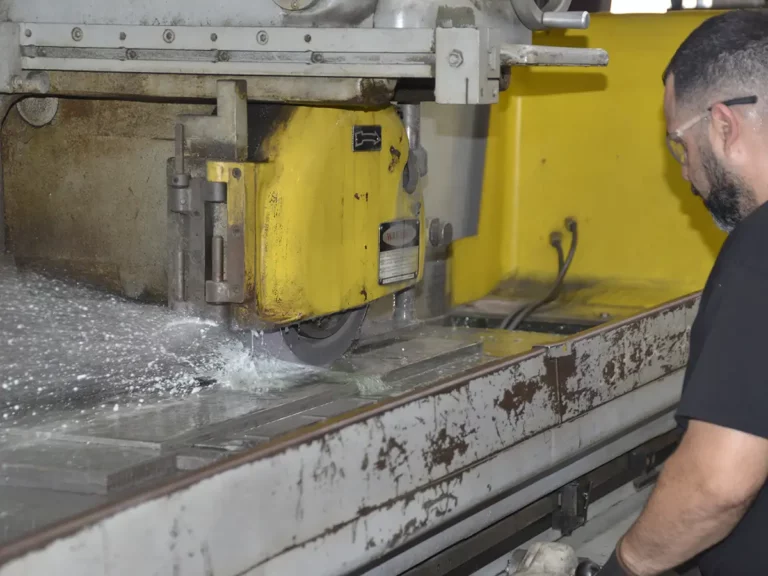
Surface Grinding Process
1. Component Preparation
Components are cleaned and inspected before grinding. We verify material specifications, identify existing damage, and establish baseline measurements.
2. Workholding Setup
Proper workholding is critical for surface grinding success. We use:
- Magnetic Chucks: For ferrous materials
- Vacuum Chucks: For non-magnetic materials
- Fixture Mounting: For unusual shapes or thin components
- Edge Blocking: For maximum flatness control
3. Grinding Operation
Multiple grinding passes remove material while achieving specified flatness and surface finish:
- Roughing Passes: Remove bulk material efficiently
- Semi-Finishing: Approach final dimensions
- Finishing Passes: Achieve specified surface finish
- Spark-Out: Final passes with no table feed for best finish
4. In-Process Inspection
We check dimensions and flatness during grinding to ensure we’re progressing correctly toward specifications.
5. Final Inspection
- Completed surfaces are measured for:
- Flatness using precision indicators or surface plates
- Dimensions using micrometers and height gages
- Surface finish using profilometers
- Parallelism when both sides are ground
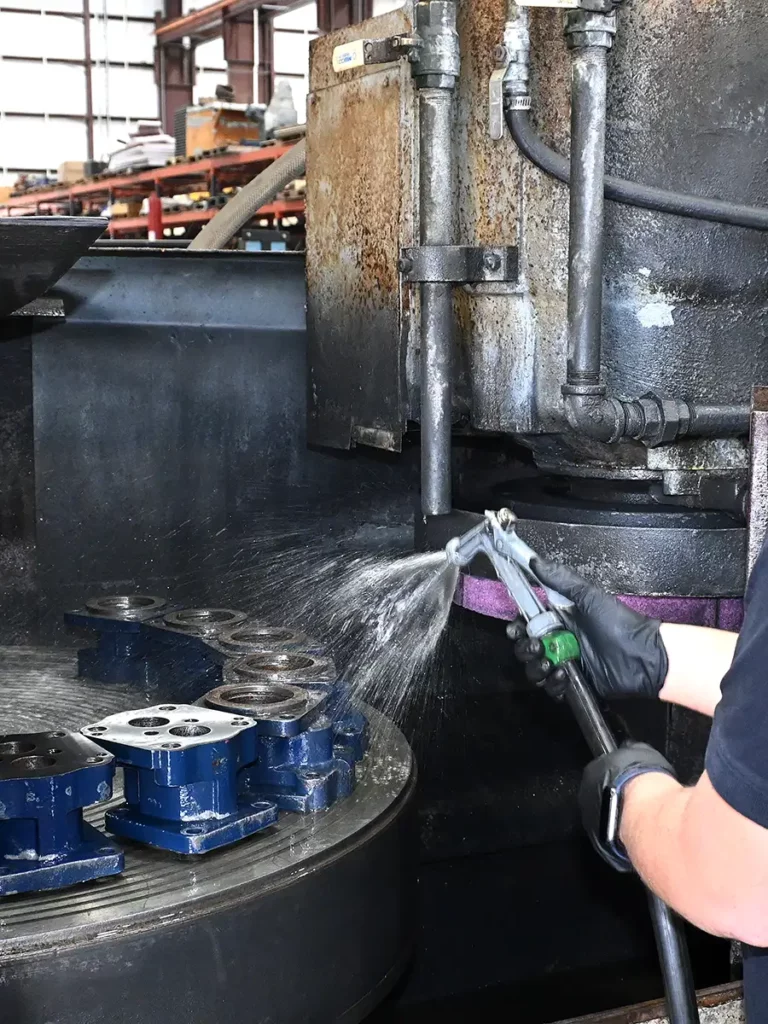
Materials We Grind
United Precision Grinding surface grinds virtually all metals:
Ferrous Materials:
- Carbon steel (all grades)
- Stainless steel (300 series, 400 series, duplex, super duplex)
- Tool steel (D2, A2, O1, H13, etc.)
- Cast iron (gray, ductile, white)
- Alloy steels (4140, 4340, 8620, etc.)
Non-Ferrous Materials:
- Aluminum (all grades)
- Bronze and brass
- Copper
- Titanium
- Exotic alloys (Inconel, Monel, Hastelloy, etc.)
Hard Materials:
- Hardened tool steel (up to 65 HRC)
- Carbide (with specialized grinding wheels)
- Ceramics (limited applications)
Why Choose United Precision Grinding for Surface Grinding
Large Component Capability
Our 30″ x 72″ surface grinders handle components that many grinding shops cannot accommodate. Large valve flanges, structural plates, and industrial components are no problem.
Tight Tolerance Achievement
We routinely hold flatness tolerances to 0.0001″ when functionally required. Our climate-controlled grinding environment and precision equipment enable these tight tolerances.
Superior Surface Finishes
We achieve surface finishes down to 4 Ra when specified. Proper wheel selection, grinding parameters, and operator skill combine to deliver excellent surface quality.
Engineering Support
Our technical team helps you specify appropriate tolerances and surface finishes for your application. Over-specification increases cost without functional benefit — we help you find the optimal balance.
Quality Documentation
Every surface grinding project includes:
- Dimensional inspection reports
- Flatness measurement data
- Surface finish measurements
- Material certifications (when provided)
- Photography of completed work
Surface Grinding FAQs
What's the difference between surface grinding and milling?
Surface grinding achieves tighter tolerances (±0.0001″ vs ±0.001″) and better surface finishes (4 Ra vs 125 Ra) than milling. Grinding is necessary when precision requirements exceed milling capabilities.
How flat can you grind a surface?
We routinely achieve flatness tolerances of 0.0001″ across reasonable surface areas. Larger surfaces may require slightly looser tolerances due to material properties and thermal effects.
Can you grind both sides of a component?
Yes, we can grind both sides to achieve parallelism and specified thickness. Parallelism to 0.0002″ per inch of width is achievable.
How do you hold components for grinding?
We use magnetic chucks for ferrous materials, vacuum chucks for non-magnetic materials, and fixtures for unusual shapes or thin components.
What surface finishes can you achieve?
Standard grinding produces 16-32 Ra. Precision grinding achieves 8-16 Ra. Super-finishing can reach 4 Ra or better when specified.