
OD Grinding Services
Precision external diameter grinding for shafts, valve stems, sleeves, and cylindrical components
OD Grinding Overview
Outer diameter grinding is essential for achieving precise dimensions and superior surface finishes on cylindrical components such as shafts, valve stems, sleeves, and pins. United Precision Grinding’s OD grinding capabilities deliver the roundness, concentricity, and surface quality required for demanding industrial applications.
OD grinding uses a rotating grinding wheel that contacts the external surface of a rotating workpiece, removing material to achieve precise cylindrical dimensions. This process is critical for components that must slide, rotate, or seal within tight clearances where dimensional accuracy and surface finish directly impact performance.
OD Grinding Capabilities
Tolerance Capabilities
- Diameter Tolerance: ±0.0002″ to ±0.0005″
- Roundness: ±0.00005″ to ±0.0002″
- Concentricity: ±0.0001″ (between multiple diameters)
- Straightness: ±0.0001″ per inch of length
- Surface Finish: 4 to 8 Ra (standard), 2 to 4 Ra (mirror finish)
Capacity Ranges
- Diameter range: 0.25″ to 24″ on cylindrical grinders; up to 72″ on vertical grinders for large components
- Maximum Length: 120″ (between centers)
- Types: Cylindrical, taper, and radius
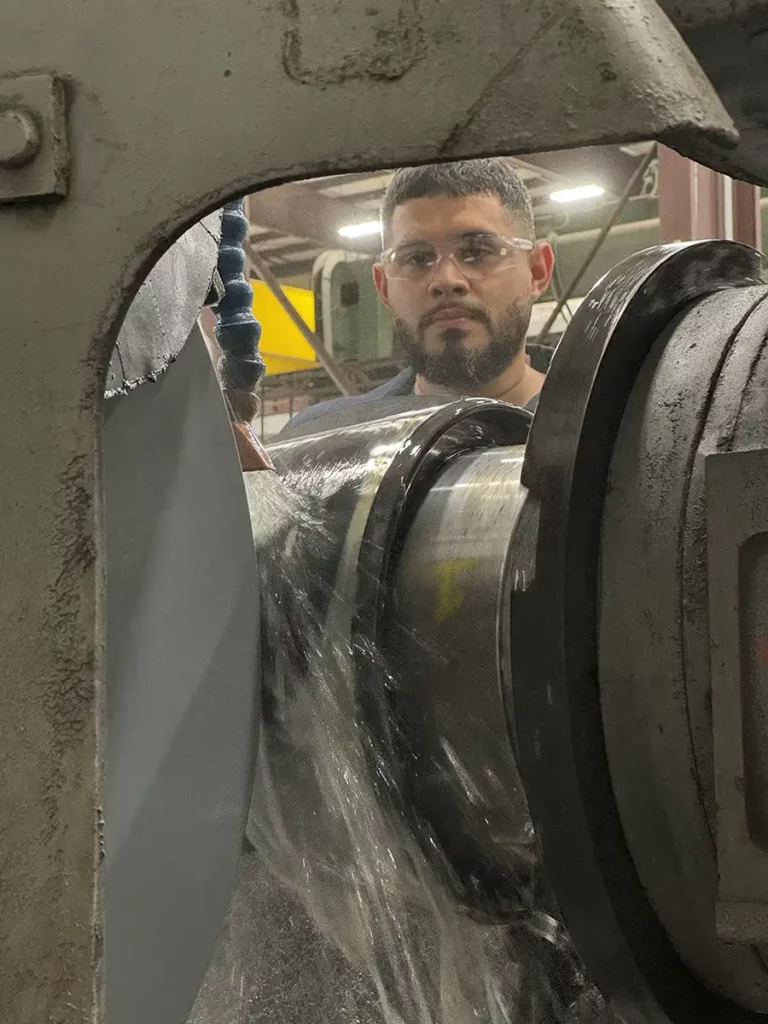
OD Grinding Equipment and Methods
Cylindrical Grinders
Between-Centers Grinding:
- Workpiece supported between headstock and tailstock centers
- Excellent for maintaining concentricity between multiple diameters
- Length capacity up to 120″
- Precision control of diameter, taper, and surface finish
Specifications:
- Grinding length: 4″ and 120″
- Control: CNC and manual
Centerless Grinding
For High-Volume Production:
- No centers required (workpiece supported by work rest blade)
- Excellent for high-volume identical parts
- Fast cycle times
- Consistent roundness and surface finish
Ideal Applications:
- Valve stem production runs
- Precision pins in quantity
- Shafts without center holes
- Cylindrical parts requiring high volume
Vertical Grinder OD Grinding
For Large Diameter Components:
- Valve body OD grinding
- Large cylindrical components up to 72″ diameter
- Heavy component grinding
- Single-setup multi-diameter grinding
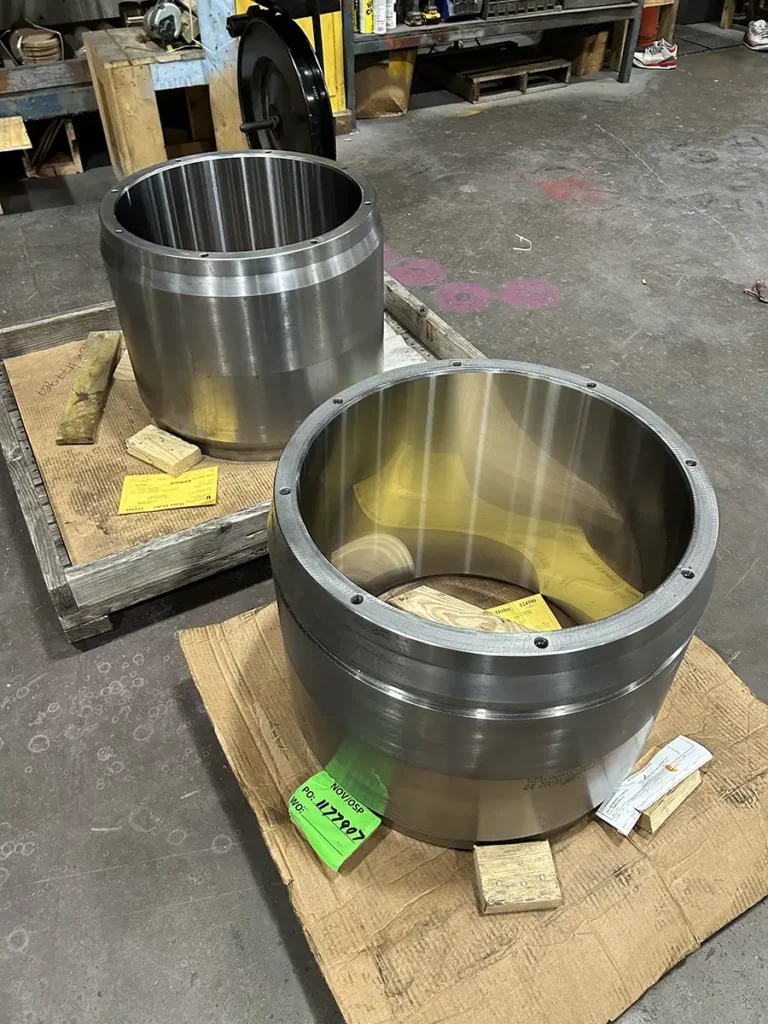
Common OD Grinding Applications
Valve Components
Valve Stems:
- Precision diameter for packing sealing
- Surface finish for reduced friction and wear
- Straightness for proper operation
- Stem tip grinding for gate valves
Valve Bonnets:
- External diameter for body fit
- Precision and roundness
- Surface finish for O-ring sealing (when applicable)
Valve Sleeves and Bushings:
- OD for press fit or clearance fit
- Concentricity with ID
- Surface finish specification
Valve Body OD:
- External diameter for flange fit-up
- Large diameter grinding on vertical grinders
- Cylindricity control
Industrial Shaft Grinding
Applications:
- Pump shafts
- Motor shafts
- Gearbox shafts
- Drive shafts
- Hydraulic cylinder rods
Requirements:
- Bearing journal precision (typically ±0.0002″)
- Roundness for bearing fit
- Surface finish for bearing operation
- Concentricity between journals
Bearing Journals and Seal Surfaces
Bearing Journals:
- Tight diameter tolerance for bearing fit
- Excellent roundness for load distribution
- Surface finish for bearing life
- Hardness considerations
Seal Surfaces:
- Precision diameter for seal fit
- Superior surface finish for sealing
- Roundness to prevent leakage
- Surface hardness (grinding after heat treat)
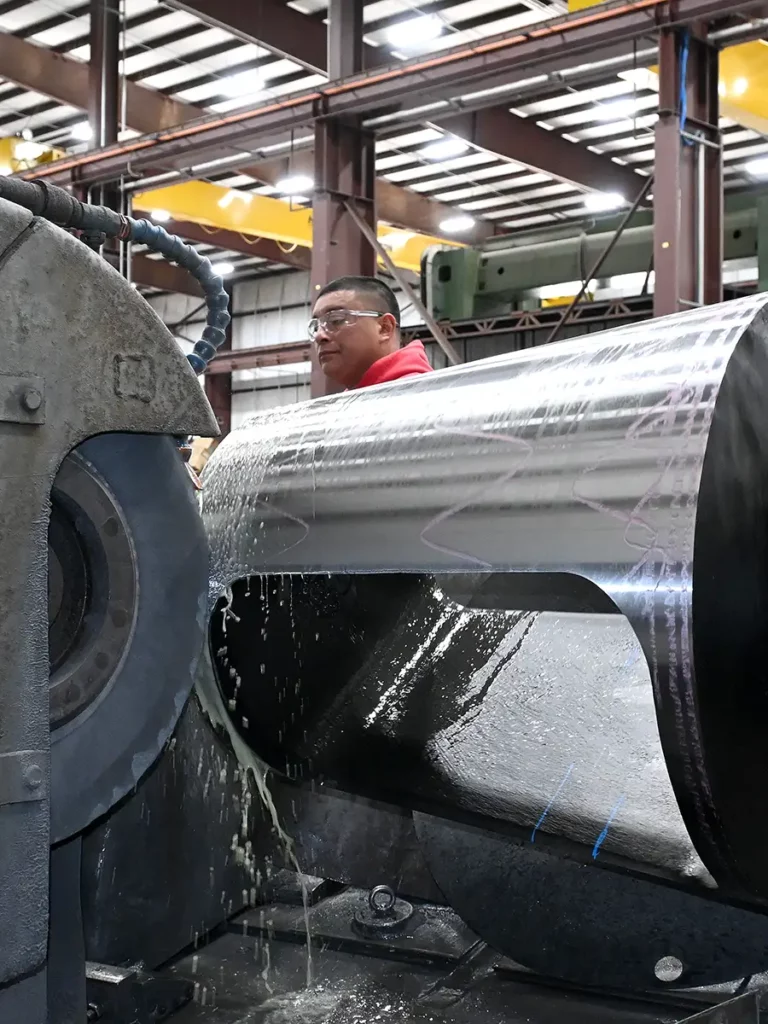
OD Grinding Process
1. Component Preparation
- Cleaning external surfaces
- Inspection for existing damage or runout
- Verification of material and hardness
- Baseline measurements
2. Setup and Workholding
Between-Centers Setup:
- Centers installed in both ends
- Component mounted between headstock and tailstock
- Dead centers or live centers depending on application
- Runout checked and corrected
- Steady rests for long/thin components
Centerless Setup:
- Work rest blade positioning
- Control wheel and grinding wheel setup
- Feed rate and speed settings
Vertical Grinder Setup:
- Component mounted on rotary table
- Centering and clamping
- Grinding wheel positioned
3. Roughing Operations
- Remove bulk material
- Approach final diameter
- Verify setup and alignment
- Check for taper or runout issues
4. Finishing Operations
- Achieve final diameter specification
- Optimize surface finish
- Control roundness and cylindricity
- Minimize grinding wheel wear effects
- Spark-out for best finish
5. Inspection and Measurement
- Diameter measurement at multiple locations
- Micrometers
- Snap gages
- Air gaging for high precision
- Roundness verification
- Dial indicators
- Roundness testers for critical applications
- Surface finish measurement
- Profilometers for Ra measurement
- Straightness verification
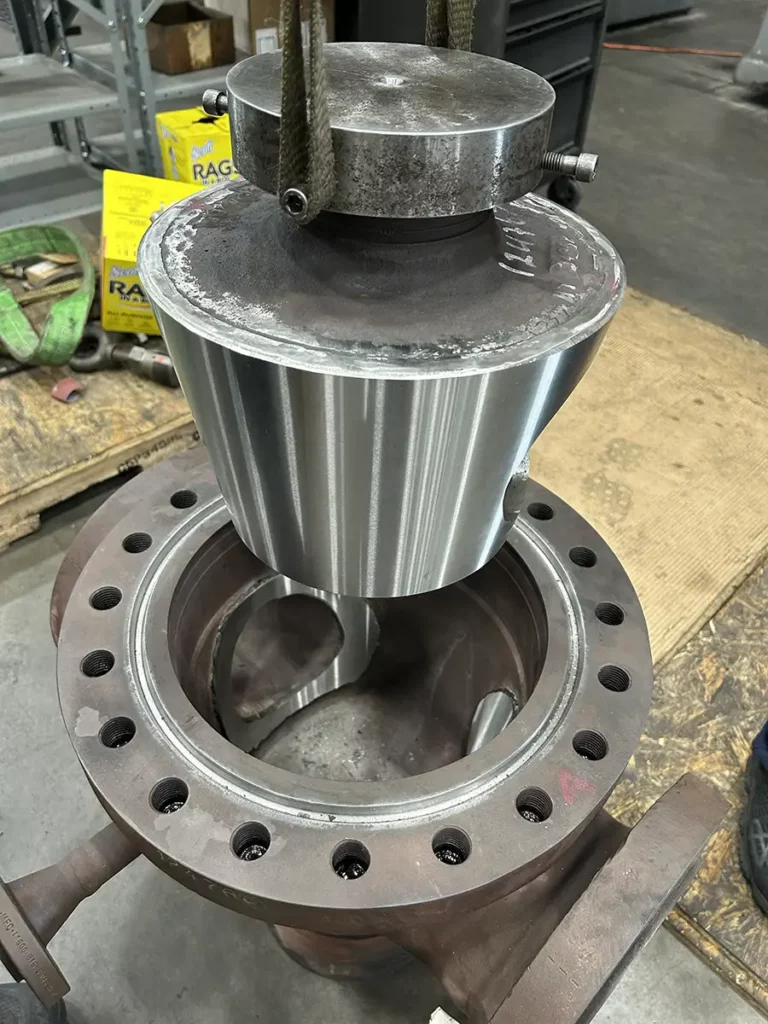
Materials We Grind
Ferrous Materials:
- Carbon steel (all grades, including hardened)
- Stainless steel (300 series, 400 series, precipitation hardening)
- Alloy steel (4140, 4340, 8620, etc.)
- Tool steel (D2, A2, O1, H13, etc.)
- Cast iron
Non-Ferrous Materials:
- Stainless steel (non-magnetic grades)
- Aluminum
- Bronze and brass
- Copper alloys
- Titanium
Hard Materials:
- Through-hardened steel (up to 65 HRC)
- Case-hardened steel (carburized, nitrided)
Why OD Grinding is Critical
Bearing Journal Precision
Precision-ground bearing journals are essential for:- Proper bearing fit (typically ±0.0002″)
- Load distribution across bearing
- Bearing life and performance
- Reduced vibration and noise
- Proper shaft alignment
Seal Surface Quality
Ground seal surfaces provide:- Smooth surface finish preventing seal damage
- Roundness preventing leakage
- Proper diameter for seal compression
- Surface hardness resisting wear
Valve Stem Performance
Precision-ground valve stems ensure:- Proper packing compression and sealing
- Smooth operation with minimal friction
- Resistance to packing wear
- Straight stem travel
- Long service life
OD Grinding vs. Turning
When to Grind vs. Turn
Choose OD Grinding When:- Tolerance tighter than ±0.001″ required
- Surface finish better than 32 Ra required
- Material hardness above 40 HRC
- Roundness specification tighter than ±0.0005″
- Surface has been heat treated
- Multiple diameters requiring tight concentricity
- Tolerance ±0.002″ or looser acceptable
- Surface finish 63-125 Ra acceptable
- Material is soft (below 35 HRC)
- Large material removal required
- No heat treatment after machining
- Cost minimization priority
OD Grinding FAQs
What's the best surface finish you can achieve on OD grinding?
We routinely achieve 4-8 Ra on OD grinding. For super-finishing applications, we can reach 2-4 Ra when specified.
Can you grind hardened steel shafts?
Yes, we grind hardened steel up to 65 HRC. Grinding is typically performed after heat treatment to achieve final dimensions on hardened surfaces.
How do you prevent taper when grinding long shafts?
Yes, we grind hardened steel up to 65 HRC. Grinding is typically performed after heat treatment to achieve final dimensions on hardened surfaces.
We use precision alignment, steady rests for support, proper grinding techniques, and in-process measurement to control taper on long components.
Yes, we grind hardened steel up to 65 HRC. Grinding is typically performed after heat treatment to achieve final dimensions on hardened surfaces.
Can you grind multiple diameters with tight concentricity?
Yes, between-centers grinding excels at maintaining tight concentricity (±0.0001″) between multiple diameters on the same shaft.
What's the difference between OD grinding and centerless grinding?
OD grinding (between-centers) is more versatile for different part geometries and low-volume work. Centerless grinding is highly efficient for high-volume production of identical cylindrical parts.
How round can you grind a shaft?
We routinely achieve roundness of 0.0001″ to 0.0002″ depending on diameter, length, and material properties.