Engineering Support Services
Technical expertise and consultation to optimize your precision grinding projects.
Engineering Support Overview
Precision grinding projects often involve complex technical requirements, tight tolerances, and critical applications where failure is not an option. United Precision Grinding provides comprehensive engineering support to help you navigate these challenges and achieve optimal results.
Our engineering support begins with your initial inquiry. When you contact us with a project, our technical team reviews your requirements, examines your drawings or specifications, and provides recommendations for the most effective and economical approach. We identify potential challenges early, suggest process improvements, and ensure that our capabilities align with your needs.
Engineering support isn’t an add-on service at United Precision Grinding—it’s an integral part of how we do business. When you work with us, you gain access to decades of grinding expertise and a team committed to your project’s success.
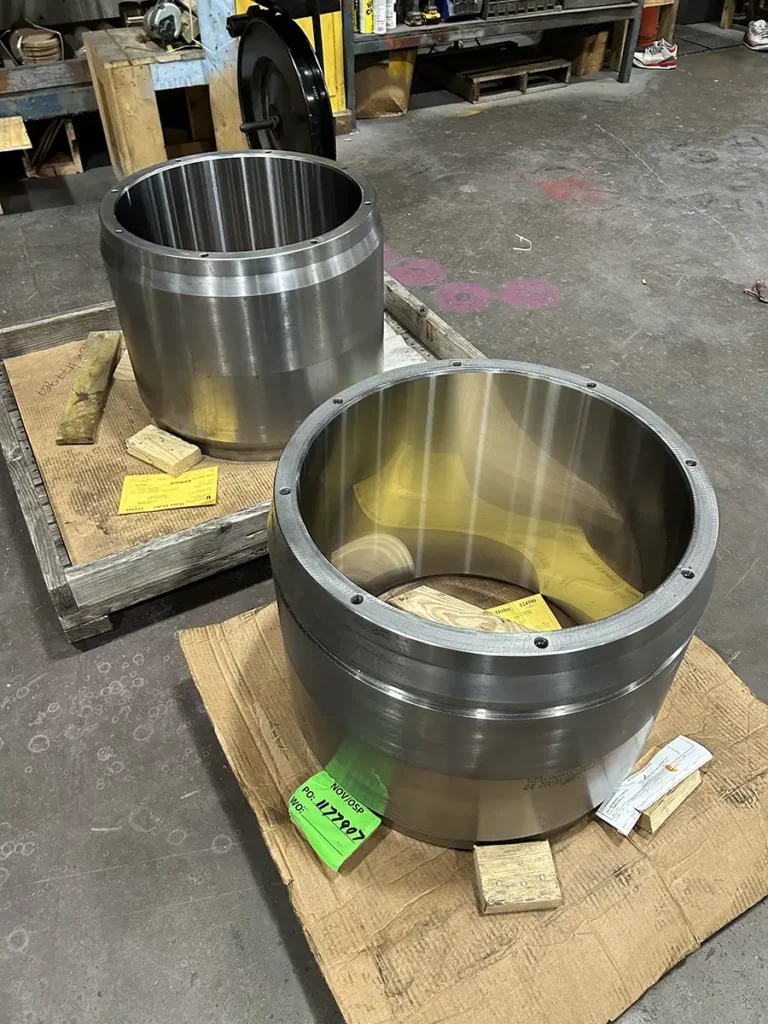
Engineering Support Services
Technical Review and Consultation
Drawing and Specification Review:
When you submit a quote request, our engineering team:
- Reviews all dimensions and tolerances
- Identifies critical features requiring special attention
- Verifies that specifications are achievable
- Notes any ambiguities requiring clarification
- Assesses material and hardness requirements
Feasibility Assessment:
We evaluate whether:
- Our equipment can handle the component size and weight
- Required tolerances are achievable with grinding
- Surface finish specifications are realistic
- Material properties are suitable for grinding
- Timeline is compatible with process requirements
Recommendation Development:
Based on our review, we provide:
- Optimal grinding process recommendations
- Alternative approaches when beneficial
- Cost-saving suggestions without compromising quality
- Timeline expectations
- Potential challenges and mitigation strategies
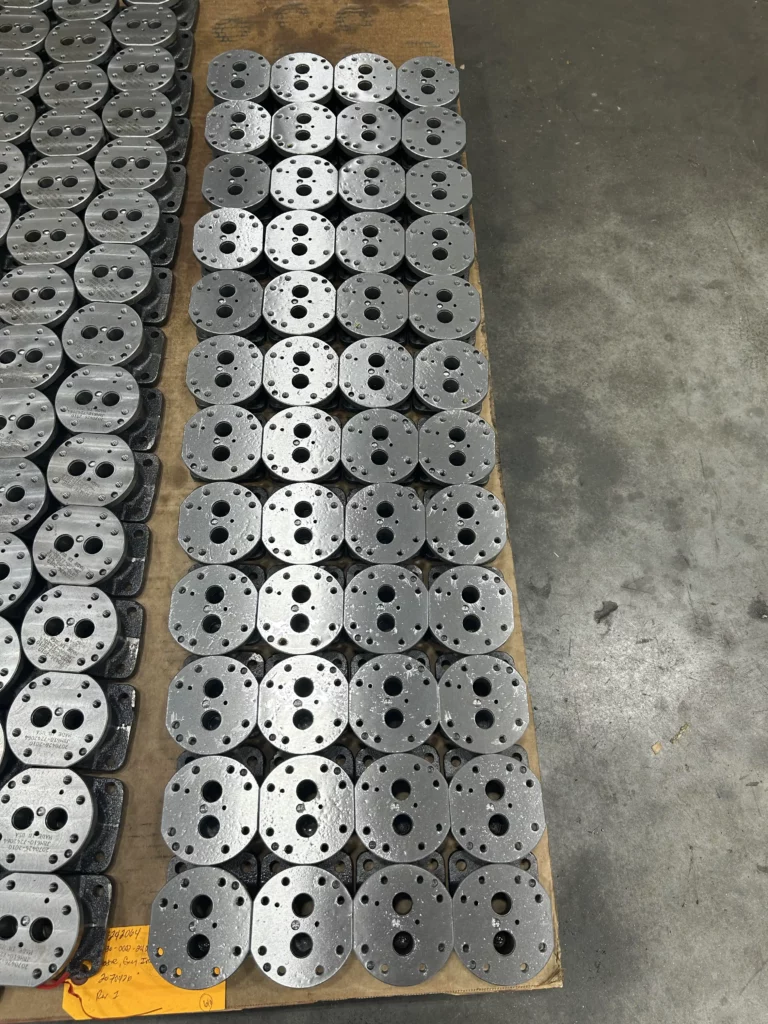
Tolerance Analysis
Understanding Tolerance Requirements:
Not all tolerances are created equal. Our engineering team helps you:
- Distinguish between critical and non-critical dimensions
- Understand tolerance stackup effects
- Identify appropriate tolerance ranges for function
- Balance precision requirements with cost
- Avoid over-specification that increases cost without functional benefit
Tolerance Optimization:
We work with you to:
- Specify tolerances tight enough for function but not tighter
- Consider measurement capability when setting tolerances
- Account for material properties affecting dimensional stability
- Factor in thermal effects on large components
- Plan for appropriate inspection methods
Geometric Dimensioning and Tolerancing (GD&T):
Our team understands GD&T principles:
- Flatness, perpendicularity, cylindricity, concentricity
- Datum reference frames
- Feature control frames
- Maximum material condition (MMC) and least material condition (LMC)
- Practical application in grinding operations
- Measurement methods for verification
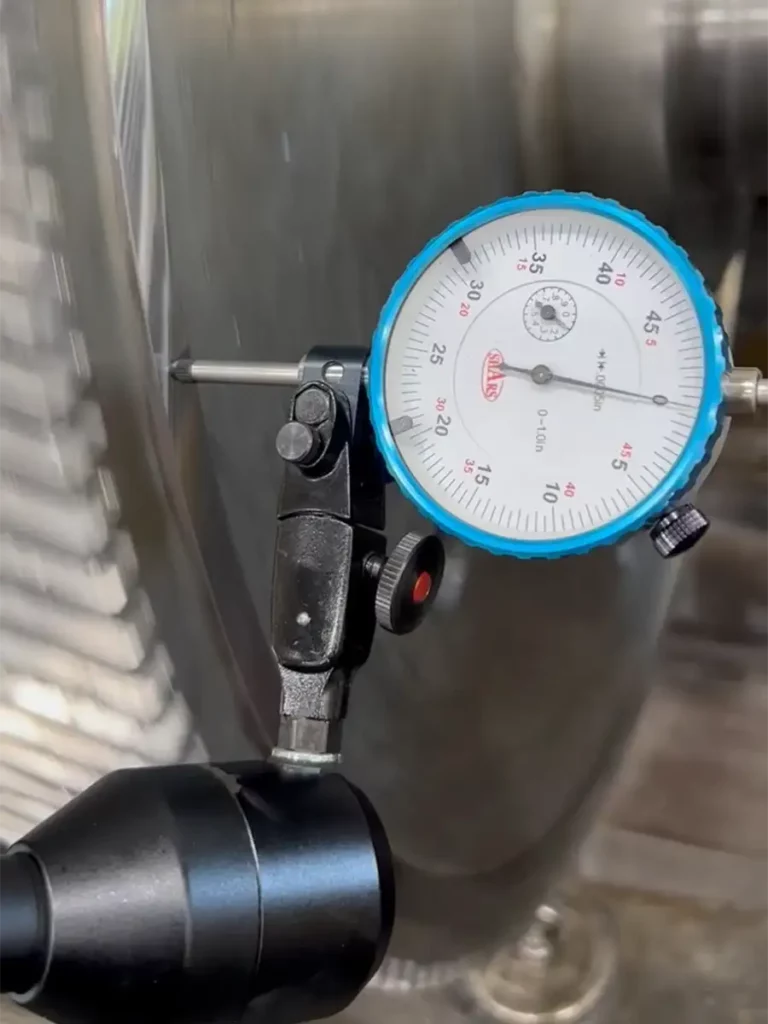
Process Planning and Optimization
Grinding Process Selection:
- We determine the optimal grinding approach:
- Surface grinding vs. cylindrical grinding vs. vertical grinding
- Grinding sequence for multiple features
- Workholding strategies for secure and accessible setup
- Grinding wheel selection (aluminum oxide, CBN, diamond)
- Coolant and lubrication requirements
- Thermal management approach
Material Removal Strategy:
For efficient grinding:
- Rough grinding parameters for bulk removal
- Semi-finishing passes to approach dimension
- Finish grinding parameters for precision
- Spark-out requirements for superior surface finish
- In-process inspection points
- Minimizing grinding time while maintaining quality
Setup and Fixturing:
Engineering support for:
- Custom fixture design when needed
- Workholding recommendations (magnetic, mechanical, vacuum)
- Setup sequences for multiple operations
- Datum establishment and verification
- Repeatability considerations for production runs
- Access to all surfaces requiring grinding
Grinding Wheel Selection:
Critical decisions affecting results:
- Abrasive type (aluminum oxide, CBN, diamond)
- Grit size for finish and material removal rate
- Bond type (vitrified, resinoid, metal)
- Wheel grade (hardness)
- Structure (density)
- Wheel shape and size
Material Selection Guidance
Grindability Assessment:
Different materials respond differently to grinding:
- Free-machining vs. difficult-to-grind materials
- Hardness effects on grinding parameters
- Ductile vs. brittle material behavior
- Heat treatment state considerations
- Surface integrity requirements
- Residual stress management
Material Recommendations:
When you have flexibility in material selection:
- Materials that grind efficiently
- Alternatives achieving same functional requirements
- Cost-effective material choices
- Availability and lead time considerations
- Heat treatment recommendations
- Hardness optimization for grinding
Material Property Considerations:
Understanding how properties affect grinding:
- Hardness: Higher hardness requires slower parameters, more frequent wheel dressing
- Thermal Conductivity: Low conductivity materials (stainless, titanium) require special coolant strategies
- Ductility: Ductile materials can “load” grinding wheels, requiring open wheel structures
- Residual Stress: Some materials develop residual stress from grinding, affecting dimensional stability
- Work Hardening: Materials that work harden (300-series stainless) require specific grinding approaches
Examples by Material Type:
Carbon Steel (A105, 1018, 4140):
- Good grindability
- Standard grinding parameters
- Aluminum oxide wheels are preferred
- Rust prevention required
Stainless Steel (316/316L):
- Work hardens during grinding
- Lower grinding speeds required
- CBN wheels often beneficial
- Requires sharp wheels, frequent dressing
- Abundant coolant essential
Tool Steel (D2, A2, O1):
- Usually ground after heat treatment
- Hardness 55-65 HRC typical
- CBN wheels recommended for hardened
- Burn and cracking risk if parameters too aggressive
Exotic Alloys (Inconel, Monel, Hastelloy):
- Difficult to grind (work hardening, low thermal conductivity)
- CBN or special grinding wheels required
- Conservative grinding parameters
- Excellent coolant delivery critical
- May require multiple grinding passes
Reverse Engineering Services
When Documentation is Missing:
- Sometimes components must be reproduced without complete drawings:
- Precision measurement of existing parts
- Creation of manufacturing drawings
- Tolerance determination from the function
- Critical dimension identification
- Material analysis when needed
- Functional analysis to understand requirements
Reverse Engineering Process:
1. Component Receipt and Assessment:
- Visual inspection
- Photography for documentation
- Initial dimensional survey
- Wear pattern analysis (if worn component)
- Material identification (if unknown)
2. Precision Measurement:
- CMM (coordinate measuring machine) for complex features
- Micrometers and precision gages for dimensions
- Surface finish measurement
- Geometric tolerance verification
- Multiple measurement points for statistical confidence
3. Drawing Creation:
- CAD model creation (if required for complex geometry)
- 2D drawing generation with dimensions
- Tolerances specified based on function and manufacturability
- GD&T callouts where appropriate
- Material and finish specifications
- Critical dimension highlighting
4. Customer Review:
- Drawing review with customer
- Tolerance discussion and optimization
- Material confirmation
- Quantity and timeline planning
- Quote development
5. Manufacturing:
- Production from reverse-engineered documentation
- First article inspection and approval
- Customer sign-off before full production
Common Reverse Engineering Scenarios:
- Obsolete equipment parts requiring reproduction
- Imported machinery with metric or incomplete drawings
- Modified components needing documentation
- Prototype parts requiring production drawings
- Damaged parts requiring restoration
Why Engineering Support Matters
Better Results
Engineering support leads to:
- Appropriate Specifications: Tolerances and finishes matched to function
- Optimized Grinding Processes: Most efficient approach for each component
- First-Time Quality: Fewer revisions, less rework, faster delivery
- Problem Prevention: Issues identified and addressed before grinding
- Exceeding Expectations: Results often better than specified
Cost Savings
Technical guidance provides:
- Avoidance of Over-Specification: Grinding only as precise as necessary
- Process Efficiency: Optimized parameters reduce grinding time
- Material Optimization: Best material for both function and grindability
- Reduced Rework: First-time quality eliminates costly rework
- Faster Turnaround: Efficient processes and problem prevention
Real Cost Impact:
- Tolerance relaxation from ±0.0005″ to ±0.001″: 30-40% cost reduction
- Material change from difficult to easy-grinding: 20-30% cost reduction
- Process optimization: 10-25% cost reduction
- Specification clarification, avoiding rework: Eliminates 100% of rework cost
Knowledge Transfer
Working with us improves:
- Your Understanding: Learn grinding capabilities and limitations
- Better Specifications: Future projects benefit from knowledge gained
- Improved Design for Manufacturability: Components designed for efficient grinding
- Reduced Engineering Time: Less time spent on grinding details
- Better Vendor Communication: Improved technical communication skills
Long-Term Benefits:
- Better specifications on future drawings
- Reduced quote cycles (clear requirements)
- Fewer quality issues
- Improved cost-effectiveness
- Stronger vendor partnerships
Partnership
Engineering support creates:
- Collaborative Relationships: Working together toward common goals
- Mutual Problem-Solving: Combined expertise addressing challenges
- Continuous Improvement: Learning and improving with each project
- Long-Term Partnerships: Relationships built on trust and results
- Reliability: Confidence in our ability to deliver
Partnership Benefits:
- Preferred vendor status
- Advance project collaboration
- Capacity planning assistance
- Priority scheduling when needed
- Proactive recommendations
Engineering Support Services FAQ
Is engineering support included in your pricing?
Yes, engineering support and technical consultation are included with every quote and project at no additional charge. This is how we do business.
When should I involve your engineering team?
As early as possible. We can provide the most value during design and specification phases, but we’re happy to help at any stage—even with problems on completed components.
Can you help if I don't have complete drawings?
Yes, we offer reverse engineering services to create drawings from existing parts. We can also help develop specifications for new designs based on functional requirements.
Do you sign NDAs for engineering discussions?
Yes, we regularly sign non-disclosure agreements to protect customer proprietary information. Your designs and specifications are confidential.
Can your engineers visit our facility?
Yes, site visits can be arranged to better understand your application, see components in service, review production equipment, or provide on-site technical support.
How quickly do you respond to technical questions?
We strive to respond to technical inquiries within 4-8 business hours during normal business hours. Complex questions requiring analysis may take longer, but we’ll acknowledge receipt and provide a timeline.
Can you help optimize tolerances to reduce cost?
Absolutely. Tolerance optimization is one of our most valuable engineering services. We analyze functional requirements and recommend appropriate tolerances that balance performance with cost.
Do you provide training on grinding specifications?
Yes, we’re happy to provide technical training on grinding capabilities, tolerance selection, surface finish specifications, and best practices. This can be informal during project discussions or structured training sessions.
Can you help solve grinding problems we're having elsewhere?
Yes, we frequently help customers solve grinding problems encountered at other facilities. Our problem-solving expertise extends beyond our own work.
What if your engineering recommendation differs from our specification?
We’ll present our analysis and recommendation, explain the technical reasoning, and discuss benefits and trade-offs. The final decision is always yours—we provide information to enable informed decisions.